§33.22 Particle Scattering and Atomic and Molecular Spectra
Contents
- §33.22(i) Schrödinger Equation
- §33.22(ii) Definitions of Variables
- §33.22(iii) Conversions Between Variables
- §33.22(iv) Klein–Gordon and Dirac Equations
- §33.22(v) Asymptotic Solutions
- §33.22(vi) Solutions Inside the Turning Point
- §33.22(vii) Complex Variables and Parameters
§33.22(i) Schrödinger Equation
With denoting here the elementary charge, the Coulomb potential between two point particles with charges and masses separated by a distance is , where are atomic numbers, is the electric constant, is the fine structure constant, and is the reduced Planck’s constant. The reduced mass is , and at energy of relative motion with relative orbital angular momentum , the Schrödinger equation for the radial wave function is given by
| 33.22.1 | |||
§33.22(ii) Definitions of Variables
Scaling
The -scaled variables and of §33.2 are given by
| 33.22.4 | ||||
At positive energies , , and:
| Attractive potentials: | , . |
|---|---|
| Zero potential (): | , . |
| Repulsive potentials: | , . |
Scaling
The -scaled variables and of §33.14 are given by
| 33.22.5 | ||||
For and , the electron mass, the scaling factors in (33.22.5) reduce to the Bohr radius, , and to a multiple of the Rydberg constant,
.
| Attractive potentials: | , . |
|---|---|
| Zero potential (): | , . |
| Repulsive potentials: | , . |
Scaling
The -scaled variables and of §13.2 are given by
| 33.22.6 | ||||
| Attractive potentials: | , . |
|---|---|
| Zero potential (): | , . |
| Repulsive potentials: | , . |
Customary variables are in atomic physics and in atomic and nuclear physics. Both variable sets may be used for attractive and repulsive potentials: the set cannot be used for a zero potential because this would imply for all , and the set cannot be used for zero energy because this would imply always.
§33.22(iii) Conversions Between Variables
§33.22(iv) Klein–Gordon and Dirac Equations
The relativistic motion of spinless particles in a Coulomb field, as encountered in pionic atoms and pion-nucleon scattering (Backenstoss (1970)) is described by a Klein–Gordon equation equivalent to (33.2.1); see Barnett (1981a). The motion of a relativistic electron in a Coulomb field, which arises in the theory of the electronic structure of heavy elements (Johnson (2007)), is described by a Dirac equation. The solutions to this equation are closely related to the Coulomb functions; see Greiner et al. (1985).
§33.22(v) Asymptotic Solutions
The Coulomb solutions of the Schrödinger and Klein–Gordon equations are almost always used in the external region, outside the range of any non-Coulomb forces or couplings.
For scattering problems, the interior solution is then matched to a linear combination of a pair of Coulomb functions, and , or and , to determine the scattering -matrix and also the correct normalization of the interior wave solutions; see Bloch et al. (1951).
For bound-state problems only the exponentially decaying solution is required, usually taken to be the Whittaker function . The functions defined by (33.14.14) are the hydrogenic bound states in attractive Coulomb potentials; their polynomial components are often called associated Laguerre functions; see Christy and Duck (1961) and Bethe and Salpeter (1977).
§33.22(vi) Solutions Inside the Turning Point
The penetrability of repulsive Coulomb potential barriers is normally expressed in terms of the quantity (Mott and Massey (1956, pp. 63–65)). The WKBJ approximations of §33.23(vii) may also be used to estimate the penetrability.
§33.22(vii) Complex Variables and Parameters
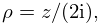
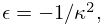
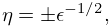
The Coulomb functions given in this chapter are most commonly evaluated for real values of , , , and nonnegative integer values of , but they may be continued analytically to complex arguments and order as indicated in §33.13.
Examples of applications to noninteger and/or complex variables are as follows.
-
•
Scattering at complex energies. See for example McDonald and Nuttall (1969).
-
•
Searches for resonances as poles of the -matrix in the complex half-plane . See for example Csótó and Hale (1997).
-
•
Regge poles at complex values of . See for example Takemasa et al. (1979).
-
•
Eigenstates using complex-rotated coordinates , so that resonances have square-integrable eigenfunctions. See for example Halley et al. (1993).
- •
-
•
Gravitational radiation. See for example Berti and Cardoso (2006).
For further examples see Humblet (1984).