5 Gamma FunctionProperties5.17 Barnes’ -Function (Double Gamma Function)5.19 Mathematical Applications
§5.18 -Gamma and -Beta Functions
Contents
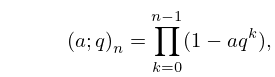
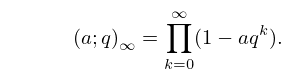
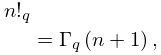
§5.18(i) -Factorials
| 5.18.1 | |||
| , | |||
| 5.18.2 | |||
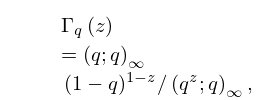
§5.18(ii) -Gamma Function
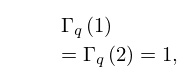
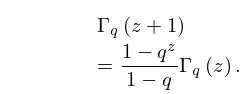
When ,
| 5.18.4 | |||
| 5.18.5 | |||
| 5.18.6 | |||
| 5.18.7 | |||
Also, is convex for , and the analog of the Bohr–Mollerup theorem (§5.5(iv)) holds.
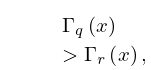
If , then
| 5.18.8 | |||
when or when , and
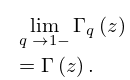
| 5.18.9 | |||
when .
| 5.18.10 | |||
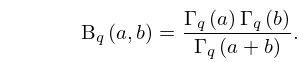
§5.18(iii) -Beta Function
| 5.18.11 | ||||
| 5.18.12 | ||||
| , , . | ||||
For -integrals see §17.2(v).