§29.15 Fourier Series and Chebyshev Series
Contents
§29.15(i) Fourier Coefficients
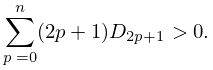
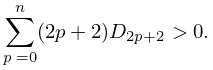
Polynomial
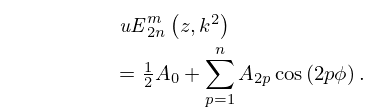
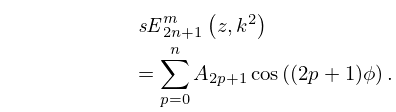
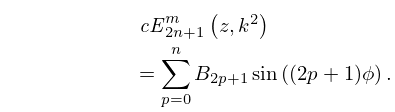
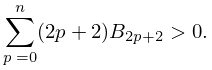
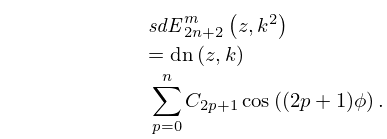
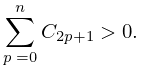
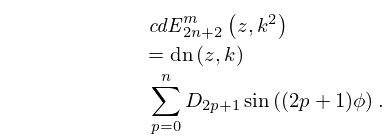
When , , the Fourier series (29.6.1) terminates:
| 29.15.1 | |||
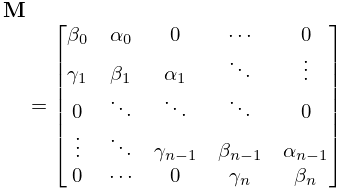
A convenient way of constructing the coefficients, together with the eigenvalues, is as follows. Equations (29.6.4), with , (29.6.3), and can be cast as an algebraic eigenvalue problem in the following way. Let
| 29.15.2 | |||
be the tridiagonal matrix with , , as in (29.3.11), (29.3.12). Let the eigenvalues of be with
| 29.15.3 | |||
and also let
| 29.15.4 | |||
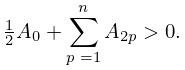
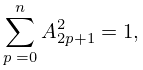
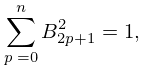
be the eigenvector corresponding to and normalized so that
| 29.15.5 | |||
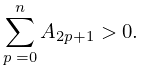
and
| 29.15.6 | |||
Then
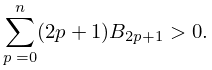
| 29.15.7 | |||
Polynomial
Polynomial
Polynomial
Polynomial
Polynomial
Polynomial
Polynomial
§29.15(ii) Chebyshev Series
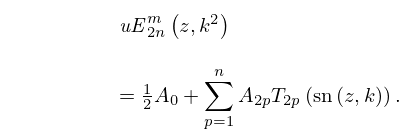
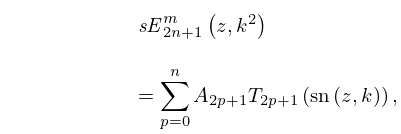
The Chebyshev polynomial of the first kind (§18.3) satisfies . Since (29.2.5) implies that , (29.15.1) can be rewritten in the form
| 29.15.43 | |||
This determines the polynomial of degree for which ; compare Table 29.12.1. The set of coefficients of this polynomial (without normalization) can also be found directly as an eigenvector of an tridiagonal matrix; see Arscott and Khabaza (1962).
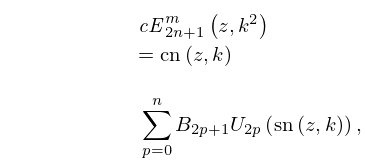
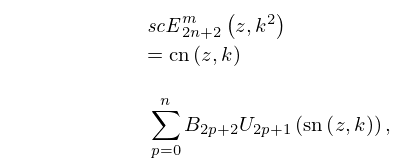
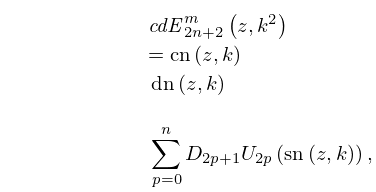
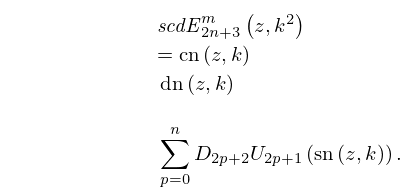
Using also , with denoting the Chebyshev polynomial of the second kind (§18.3), we obtain
| 29.15.44 | ||||
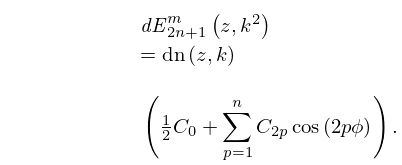
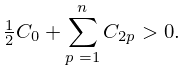
| 29.15.45 | ||||
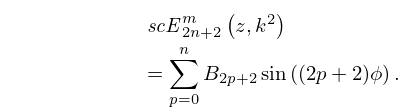
| 29.15.46 | ||||
| 29.15.47 | ||||
| 29.15.48 | ||||
| 29.15.49 | ||||
| 29.15.50 | ||||
For explicit formulas for Lamé polynomials of low degree, see Arscott (1964b, p. 205).