10 Bessel FunctionsKelvin Functions10.67 Asymptotic Expansions for Large Argument10.69 Uniform Asymptotic Expansions for Large Order
§10.68 Modulus and Phase Functions
Contents
- §10.68(i) Definitions
- §10.68(ii) Basic Properties
- §10.68(iii) Asymptotic Expansions for Large Argument
- §10.68(iv) Further Properties
§10.68(i) Definitions


§10.68(ii) Basic Properties
| 10.68.3 | ||||


| 10.68.4 | ||||


| 10.68.5 | ||||


| 10.68.6 | ||||


| 10.68.7 | ||||


With arguments suppressed,
| 10.68.8 | |||
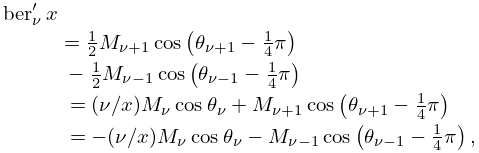
| 10.68.9 | |||
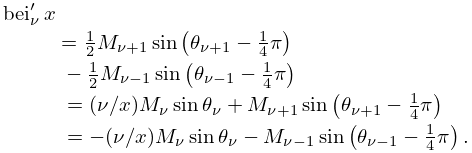
| 10.68.10 | ||||


| 10.68.11 | |||
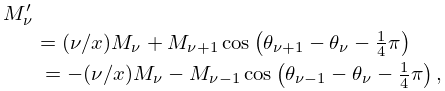
| 10.68.12 | |||
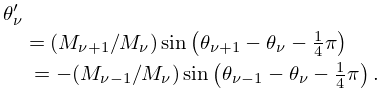
| 10.68.13 | ||||


| 10.68.14 | ||||




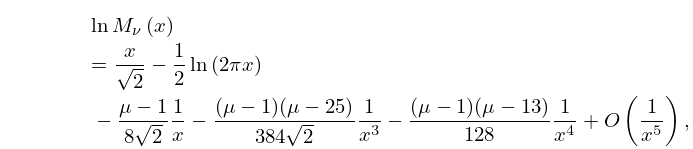
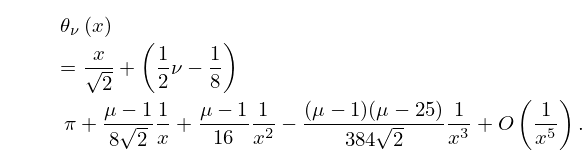
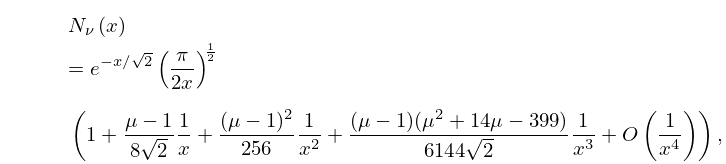
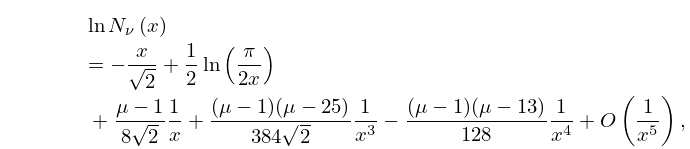
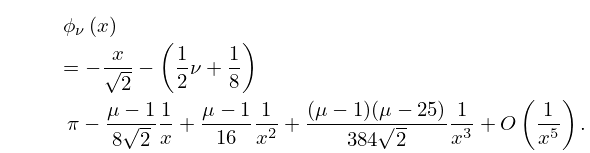
§10.68(iii) Asymptotic Expansions for Large Argument
When is fixed, , and
| 10.68.16 | ||||
| 10.68.17 | ||||
| 10.68.18 | ||||
| 10.68.19 | ||||
| 10.68.20 | ||||
| 10.68.21 | ||||

§10.68(iv) Further Properties
Additional properties of the modulus and phase functions are given in Young and Kirk (1964, pp. xi–xv). However, care needs to be exercised with the branches of the phases. Thus this reference gives (Eq. (6.10)), and (Eqs. (10.20) and (Eqs. (10.26b)). However, numerical tabulations show that if the second of these equations applies and is continuous, then ; compare Abramowitz and Stegun (1964, p. 433).