§12.11 Zeros
Contents
- §12.11(i) Distribution of Real Zeros
- §12.11(ii) Asymptotic Expansions of Large Zeros
- §12.11(iii) Asymptotic Expansions for Large Parameter
§12.11(i) Distribution of Real Zeros
If , then has no real zeros. If , then has no positive real zeros. If , , then has positive real zeros. Lastly, when , (Hermite polynomial case) has zeros and they lie in the interval . For further information on these cases see Dean (1966).
If , then has no positive real zeros, and if , , then has a zero at .
§12.11(ii) Asymptotic Expansions of Large Zeros
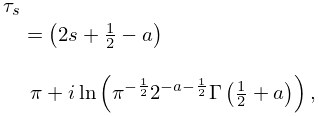
When , has a string of complex zeros that approaches the ray as , and a conjugate string. When the zeros are asymptotically given by and , where is a large positive integer and
| 12.11.1 | |||
with
| 12.11.2 | |||
and
| 12.11.3 | |||
§12.11(iii) Asymptotic Expansions for Large Parameter
For large negative values of the real zeros of , , , and can be approximated by reversion of the Airy-type asymptotic expansions of §§12.10(vii) and 12.10(viii). For example, let the th real zeros of and , counted in descending order away from the point , be denoted by and , respectively. Then
| 12.11.4 | |||
as () , fixed. Here , denoting the th negative zero of the function (see §9.9(i)). The first two coefficients are given by
| 12.11.5 | |||
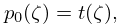
where is the function inverse to , defined by (12.10.39) (see also (12.10.41)), and
| 12.11.6 | |||
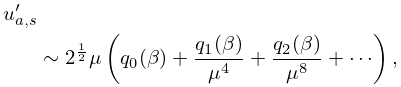
Similarly, for the zeros of we have
| 12.11.7 | |||
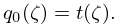
where , denoting the th negative zero of the function and
| 12.11.8 | |||
For the first zero of we also have
| 12.11.9 | |||
where the numerical coefficients have been rounded off.
For further information, including associated functions, see Olver (1959).