§12.10 Uniform Asymptotic Expansions for Large Parameter
Contents
- §12.10(i) Introduction
- §12.10(ii) Negative ,
- §12.10(iii) Negative ,
- §12.10(iv) Negative ,
- §12.10(v) Positive ,
- §12.10(vi) Modifications of Expansions in Elementary Functions
- §12.10(vii) Negative , . Expansions in Terms of Airy Functions
- §12.10(viii) Negative , . Expansions in Terms of Airy Functions
§12.10(i) Introduction
In this section we give asymptotic expansions of PCFs for large values of the parameter that are uniform with respect to the variable , when both and are real. These expansions follow from Olver (1959), where detailed information is also given for complex variables.
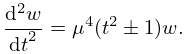
With the upper sign in (12.10.2), expansions can be constructed for large in terms of elementary functions that are uniform for (§2.8(ii)). With the lower sign there are turning points at , which need to be excluded from the regions of validity. These cases are treated in §§12.10(ii)–12.10(vi).
The turning points can be included if expansions in terms of Airy functions are used instead of elementary functions (§2.8(iii)). These cases are treated in §§12.10(vii)–12.10(viii).
Throughout this section the symbol again denotes an arbitrary small positive constant.
§12.10(ii) Negative ,
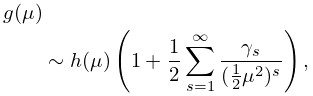
As
| 12.10.3 | |||
| 12.10.4 | |||
| 12.10.5 | |||
| 12.10.6 | |||
uniformly for , where
| 12.10.7 | |||
The coefficients are given by
| 12.10.8 | |||
where and are polynomials in of degree , ( odd), ( even, ). For ,
| 12.10.9 | ||||
| 12.10.10 | ||||
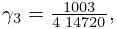
Higher polynomials can be calculated from the recurrence relation
| 12.10.11 | |||
where
| 12.10.12 | |||
and the then follow from
| 12.10.13 | |||
§12.10(iii) Negative ,
§12.10(iv) Negative ,
As
| 12.10.18 | ||||
| 12.10.19 | ||||
| 12.10.20 | ||||
| 12.10.21 | ||||
uniformly for . The quantities and are defined by
| 12.10.22 | ||||
where
| 12.10.23 | |||
and the coefficients and are given by
| 12.10.24 | ||||
compare (12.10.8).
§12.10(v) Positive ,
As
| 12.10.25 | |||
uniformly for . Here bars do not denote complex conjugates; instead
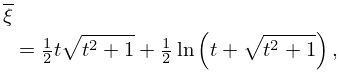
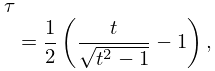
| 12.10.26 | |||
| 12.10.27 | |||
and the function has the asymptotic expansion
| 12.10.28 | |||
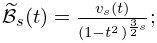
where and are as in §12.10(ii).
With the same conditions
| 12.10.29 | |||
where
| 12.10.30 | |||
§12.10(vi) Modifications of Expansions in Elementary Functions
In Temme (2000) modifications are given of Olver’s expansions. An example is the following modification of (12.10.3)
| 12.10.31 | |||
where and are as in (12.10.7) and (12.10.15) ,
| 12.10.32 | |||
and the coefficients are the product of and a polynomial in of degree . They satisfy the recursion
| 12.10.33 | |||
| , | |||
starting with . Explicitly,
| 12.10.34 | ||||
The modified expansion (12.10.31) shares the property of (12.10.3) that it applies when uniformly with respect to . In addition, it enjoys a double asymptotic property: it holds if either or both and tend to infinity. Observe that if , then , whereas or according as is even or odd. The proof of the double asymptotic property then follows with the aid of error bounds; compare §10.41(iv).
§12.10(vii) Negative , . Expansions in Terms of Airy Functions
The following expansions hold for large positive real values of , uniformly for . (For complex values of and see Olver (1959).)
| 12.10.35 | ||||
| 12.10.36 | ||||
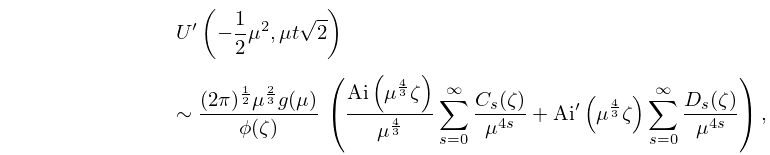
| 12.10.37 | ||||
| 12.10.38 | ||||
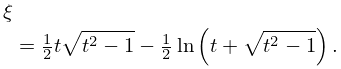
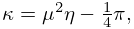
The variable is defined by
| 12.10.39 | ||||
where are given by (12.10.7), (12.10.23), respectively, and
| 12.10.40 | |||
The function is real for and analytic at . Inversely, with ,
| 12.10.41 | |||
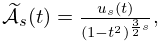
For see (12.10.14). The coefficients and are given by
| 12.10.42 | ||||
where is as in (12.10.40), is as in §12.10(ii), , and
| 12.10.43 | ||||
The coefficients and in (12.10.36) and (12.10.38) are given by
| 12.10.44 | ||||
where
| 12.10.45 | |||
Explicitly,
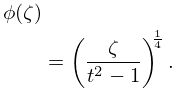
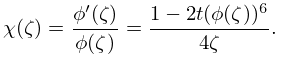
| 12.10.46 | ||||
where is as in §12.10(ii).