Digital Library of Mathematical Functions
About the Project
NIST
4 Elementary FunctionsApplications

§4.43 Cubic Equations

Let

4.43.1
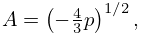
A=\left(-\tfrac{4}{3}p\right)^{{1/2}},
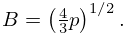
B=\left(\tfrac{4}{3}p\right)^{{1/2}},
C=\left(-\frac{27q^{2}}{4p^{3}}\right)^{{1/2}},
D=-\left(\frac{27q^{2}}{4p^{3}}\right)^{{1/2}},

where p(\neq 0) and q are real constants. The roots of

are:

  1. (a)

    A\mathop{\sin\/}\nolimits a, A\mathop{\sin\/}\nolimits\!\left(a+\frac{2}{3}\pi\right), and A\mathop{\sin\/}\nolimits\!\left(a+\frac{4}{3}\pi\right), with \mathop{\sin\/}\nolimits\!\left(3a\right)=C, when p<0 and C\leq 1.

  2. (b)

    A\mathop{\cosh\/}\nolimits a, A\mathop{\cosh\/}\nolimits\!\left(a+\frac{2}{3}\pi i\right), and A\mathop{\cosh\/}\nolimits\!\left(a+\frac{4}{3}\pi i\right), with \mathop{\cosh\/}\nolimits\!\left(3a\right)=C, when p<0 and C>1.

  3. (c)

    B\mathop{\sinh\/}\nolimits a, B\mathop{\sinh\/}\nolimits\!\left(a+\frac{2}{3}\pi i\right), and B\mathop{\sinh\/}\nolimits\!\left(a+\frac{4}{3}\pi i\right), with \mathop{\sinh\/}\nolimits\!\left(3a\right)=D, when p>0.

Note that in Case (a) all the roots are real, whereas in Cases (b) and (c) there is one real root and a conjugate pair of complex roots. See also §1.11(iii).