§31.15 Stieltjes Polynomials
Contents
§31.15(i) Definitions
Stieltjes polynomials are polynomial solutions of the Fuchsian equation (31.14.1). Rewrite (31.14.1) in the form
| 31.15.1 | |||
where is a polynomial of degree not exceeding . There exist at most polynomials of degree not exceeding such that for , (31.15.1) has a polynomial solution of degree . The are called Van Vleck polynomials and the corresponding Stieltjes polynomials.
§31.15(ii) Zeros
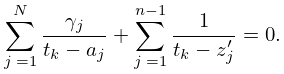
If are the zeros of an th degree Stieltjes polynomial , then every zero is either one of the parameters or a solution of the system of equations
| 31.15.2 | |||
| . | |||
If is a zero of the Van Vleck polynomial , corresponding to an th degree Stieltjes polynomial , and are the zeros of (the derivative of ), then is either a zero of or a solution of the equation
| 31.15.3 | |||
The system (31.15.2) determines the as the points of equilibrium of movable (interacting) particles with unit charges in a field of particles with the charges fixed at . This is the Stieltjes electrostatic interpretation.
The zeros , , of the Stieltjes polynomial are the critical points of the function , that is, points at which , , where
| 31.15.4 | |||
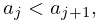
If the following conditions are satisfied:
| 31.15.5 | ||||
| , | ||||
| , | ||||
and
| 31.15.6 | |||
| , | |||
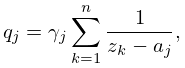
then there are exactly polynomials , each of which corresponds to each of the ways of distributing its zeros among intervals , . In this case the accessory parameters are given by
| 31.15.7 | |||
| . | |||
§31.15(iii) Products of Stieltjes Polynomials
If the exponent and singularity parameters satisfy (31.15.5)–(31.15.6), then for every multi-index , where each is a nonnegative integer, there is a unique Stieltjes polynomial with zeros in the open interval for each . We denote this Stieltjes polynomial by .
Let and be Stieltjes polynomials corresponding to two distinct multi-indices and . The products
| 31.15.8 | |||
| , | |||
| 31.15.9 | |||
| , | |||
are mutually orthogonal over the set :
| 31.15.10 | |||
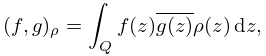
with respect to the inner product
| 31.15.11 | |||
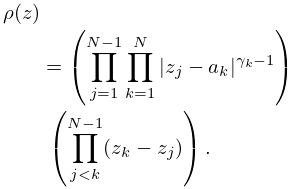
with weight function
| 31.15.12 | |||
The normalized system of products (31.15.8) forms an orthonormal basis in the Hilbert space . For further details and for the expansions of analytic functions in this basis see Volkmer (1999).