Digital Library of Mathematical Functions
About the Project
NIST
14 Legendre and Related FunctionsReal Arguments

§14.16 Zeros

Contents

§14.16(i) Notation

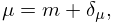
Throughout this section we assume that \mu and \nu are real, and when they are not integers we write

where m, n\in\Integer and \delta_{{\mu}}, \delta_{{\nu}}\in(0,1). For all cases concerning \mathop{\mathsf{P}^{{\mu}}_{{\nu}}\/}\nolimits\!\left(x\right) and \mathop{P^{{\mu}}_{{\nu}}\/}\nolimits\!\left(x\right) we assume that \nu\geq-\frac{1}{2} without loss of generality (see (14.9.5) and (14.9.11)).

§14.16(ii) Interval -1<x<1

The number of zeros of \mathop{\mathsf{P}^{{\mu}}_{{\nu}}\/}\nolimits\!\left(x\right) in the interval (-1,1) is \max(\lceil\nu-|\mu|\rceil,0) if any of the following sets of conditions hold:

  • (a)

    \mu\leq 0.

  • (b)

    \mu>0, n\geq m, and \delta_{{\nu}}>\delta_{{\mu}}.

  • (c)

    \mu>0, n<m, and m-n is odd.

  • (d)

    \nu=0,1,2,3,\dots.

The number of zeros of \mathop{\mathsf{P}^{{\mu}}_{{\nu}}\/}\nolimits\!\left(x\right) in the interval (-1,1) is \max(\lceil\nu-|\mu|\rceil,0)+1 if either of the following sets of conditions holds:

  • (a)

    \mu>0, n>m, and \delta_{{\nu}}\leq\delta_{{\mu}}.

  • (b)

    \mu>0, n<m, and m-n is even.

The zeros of \mathop{\mathsf{Q}^{{\mu}}_{{\nu}}\/}\nolimits\!\left(x\right) in the interval (-1,1) interlace those of \mathop{\mathsf{P}^{{\mu}}_{{\nu}}\/}\nolimits\!\left(x\right). \mathop{\mathsf{Q}^{{\mu}}_{{\nu}}\/}\nolimits\!\left(x\right) has \max(\lceil\nu-|\mu|\rceil,0)+k zeros in the interval (-1,1), where k can take one of the values −1, 0, 1, 2, subject to \max(\lceil\nu-|\mu|\rceil,0)+k being even or odd according as \mathop{\cos\/}\nolimits\!\left(\nu\pi\right) and \mathop{\cos\/}\nolimits\!\left(\mu\pi\right) have opposite signs or the same sign. In the special case \mu=0 and \nu=n=0,1,2,3,\dots, \mathop{\mathsf{Q}_{{n}}\/}\nolimits\!\left(x\right) has n+1 zeros in the interval -1<x<1.

For uniform asymptotic approximations for the zeros of \mathop{\mathsf{P}^{{-m}}_{{n}}\/}\nolimits\!\left(x\right) in the interval -1<x<1 when n\to\infty with m (\geq 0) fixed, see Olver (1997b, p. 469).

§14.16(iii) Interval 1<x<\infty

\mathop{P^{{\mu}}_{{\nu}}\/}\nolimits\!\left(x\right) has exactly one zero in the interval (1,\infty) if either of the following sets of conditions holds:

  • (a)

    \mu>0, \mu>\nu, \mu\notin\Integer, and \mathop{\sin\/}\nolimits\!\left((\mu-\nu)\pi\right) and \mathop{\sin\/}\nolimits\!\left(\mu\pi\right) have opposite signs.

  • (b)

    \mu\leq\nu, \mu\notin\Integer, and \lfloor\mu\rfloor is odd.

For all other values of \mu and \nu (with \nu\geq-\frac{1}{2}) \mathop{P^{{\mu}}_{{\nu}}\/}\nolimits\!\left(x\right) has no zeros in the interval (1,\infty).

\mathop{\boldsymbol{Q}^{{\mu}}_{{\nu}}\/}\nolimits\!\left(x\right) has no zeros in the interval (1,\infty) when \nu>-1, and at most one zero in the interval (1,\infty) when \nu<-1.