§24.15 Related Sequences of Numbers
Contents
- §24.15(i) Genocchi Numbers
- §24.15(ii) Tangent Numbers
- §24.15(iii) Stirling Numbers
- §24.15(iv) Fibonacci and Lucas Numbers
§24.15(i) Genocchi Numbers
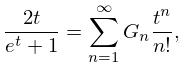
| 24.15.1 | ||||
| 24.15.2 | ||||
See Table 24.15.1.
§24.15(ii) Tangent Numbers
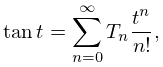
| 24.15.3 | |||
| 24.15.4 | |||
| , | |||
| 24.15.5 | |||
| . | |||
§24.15(iii) Stirling Numbers
The Stirling numbers of the first kind , and the second kind , are as defined in §26.8(i).
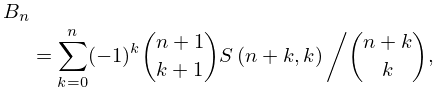
| 24.15.6 | ||||
| 24.15.7 | ||||
| 24.15.8 | ||||
§24.15(iv) Fibonacci and Lucas Numbers
The Fibonacci numbers are defined by , , and , . The Lucas numbers are defined by , , and , .
| 24.15.11 | ||||
| 24.15.12 | ||||
For further information on the Fibonacci numbers see §26.11.