DLMF
Index
Notations
Search
Help?
Citing
Customize
Annotate
UnAnnotate
About the Project
21
Multidimensional Theta Functions
Properties
21.4
Graphics
21.4
Graphics
21.5
Modular Transformations
Figure 21.4.1
(See
in context
.)
3D
Help
(a
1
)
(b
1
)
(c
1
)
(a
2
)
(b
2
)
(c
2
)
(a
3
)
(b
3
)
(c
3
)
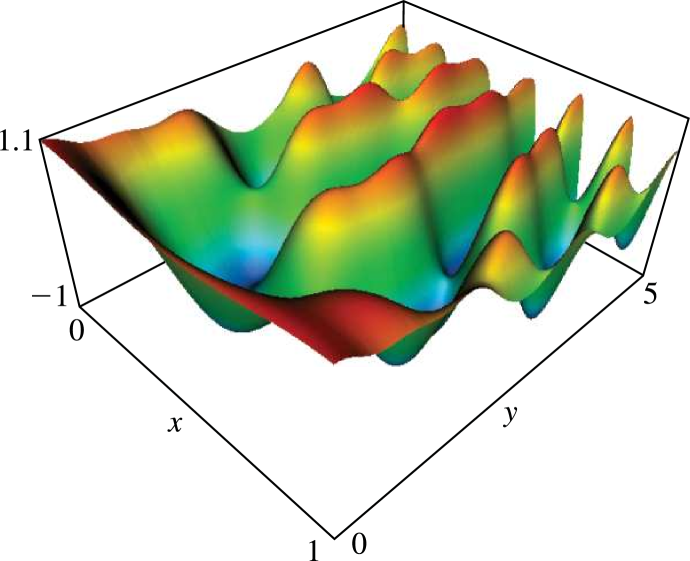
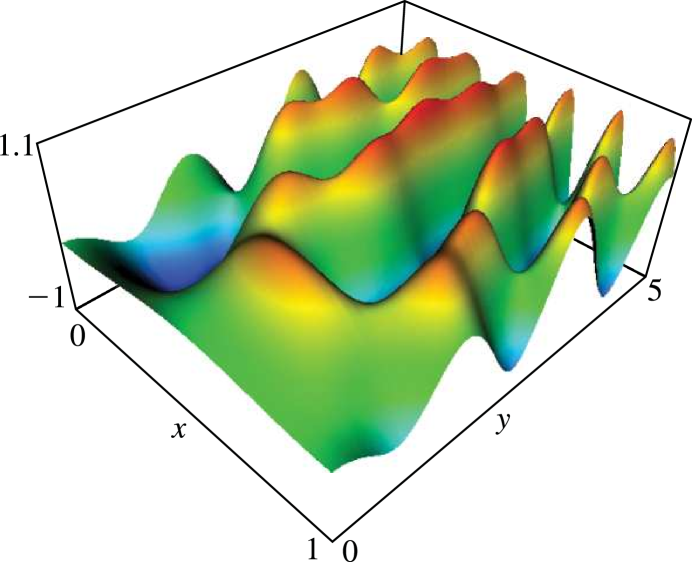
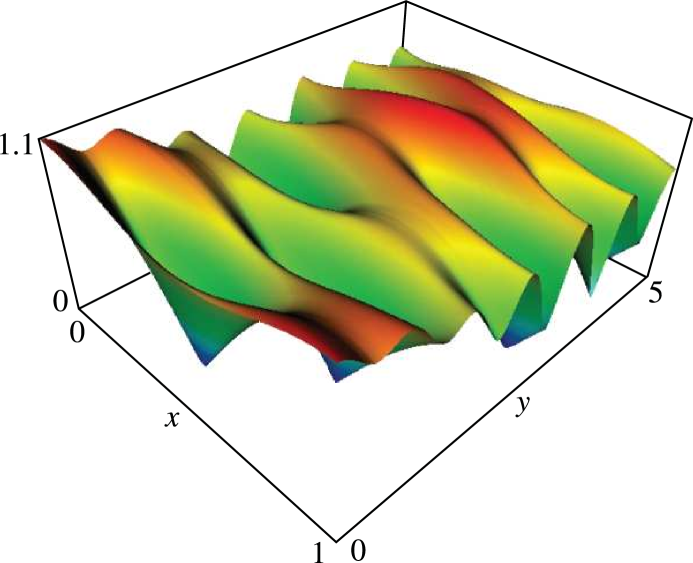
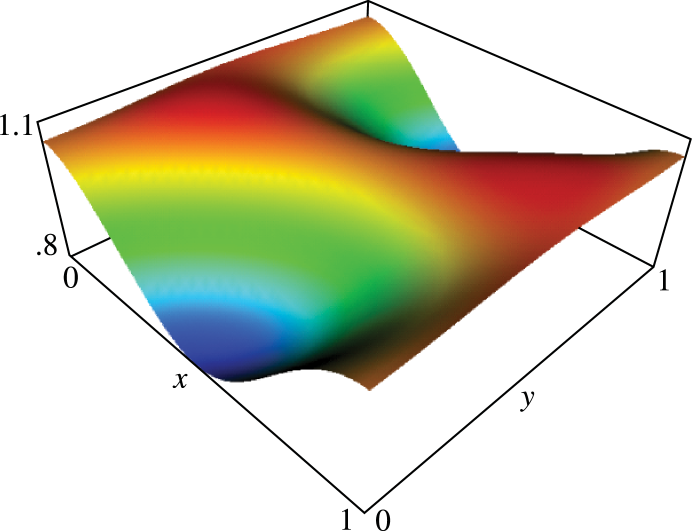
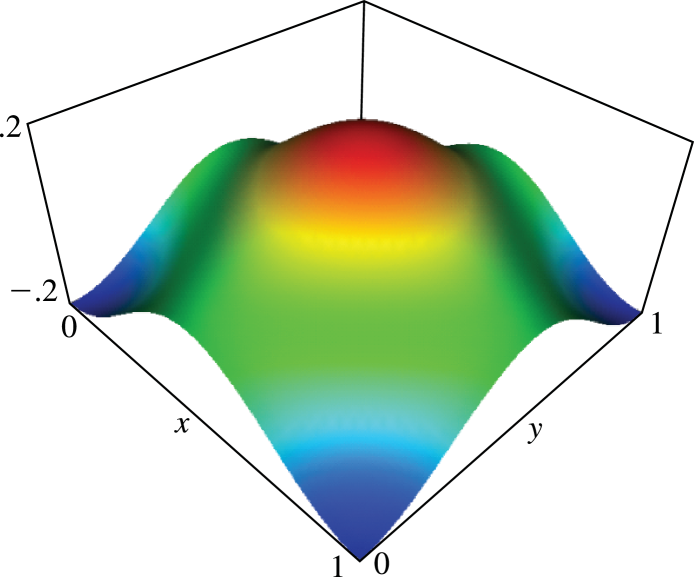
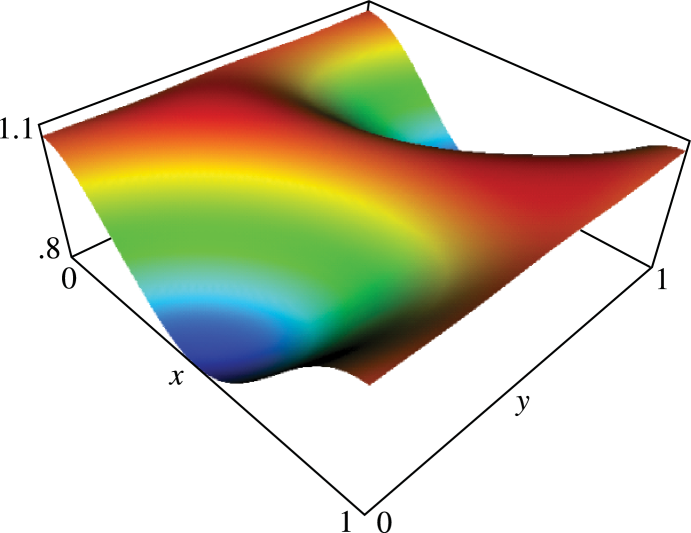
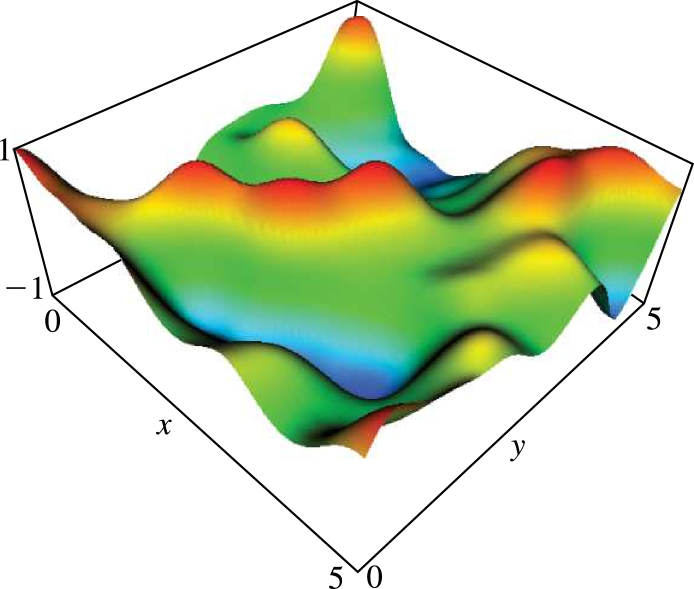
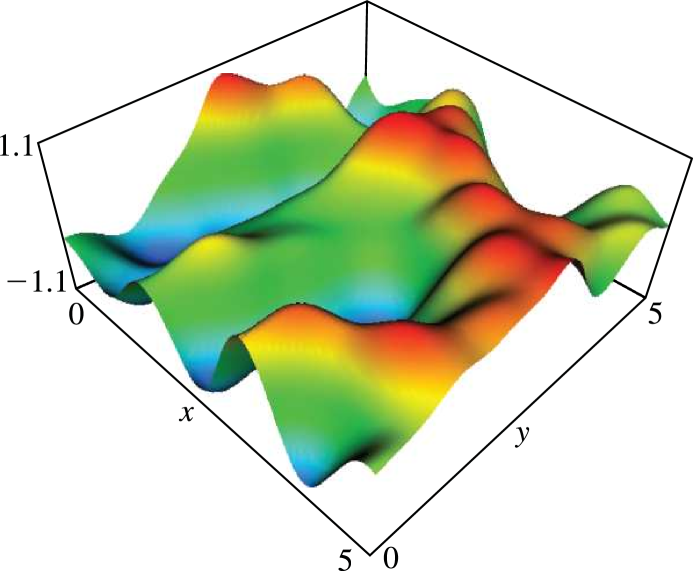
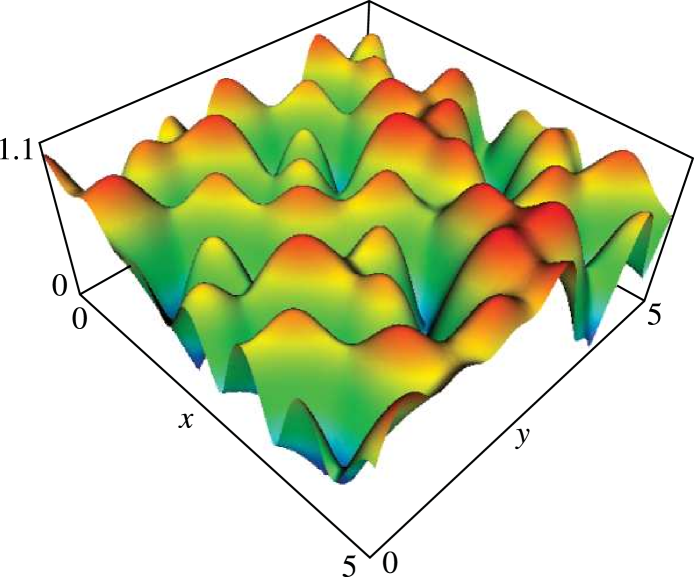
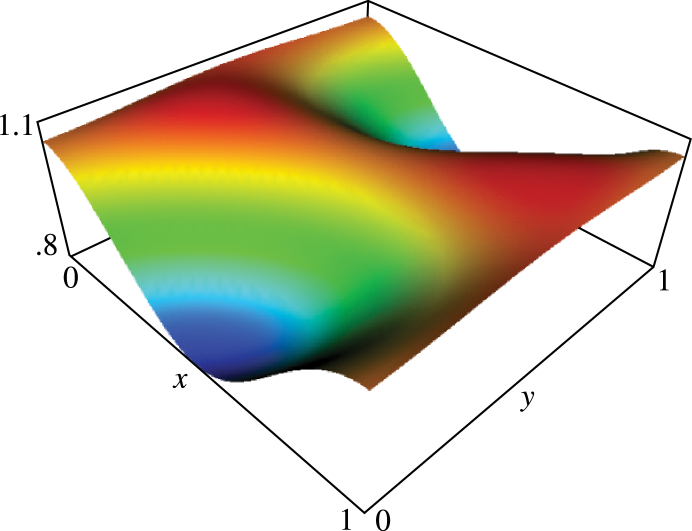
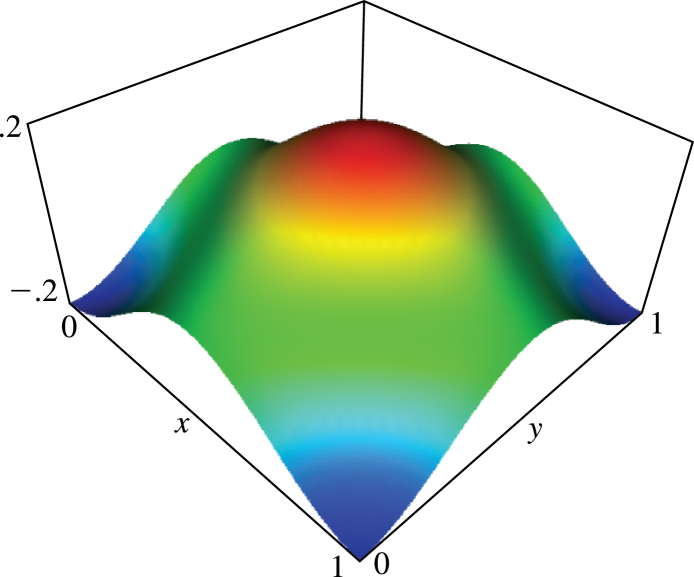
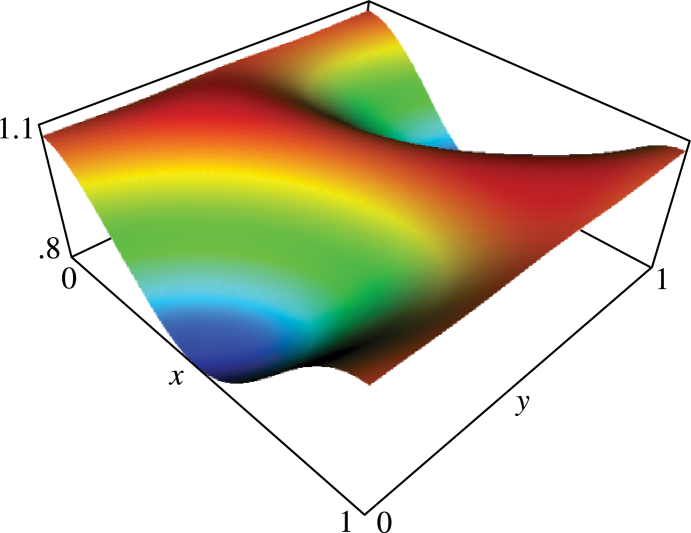
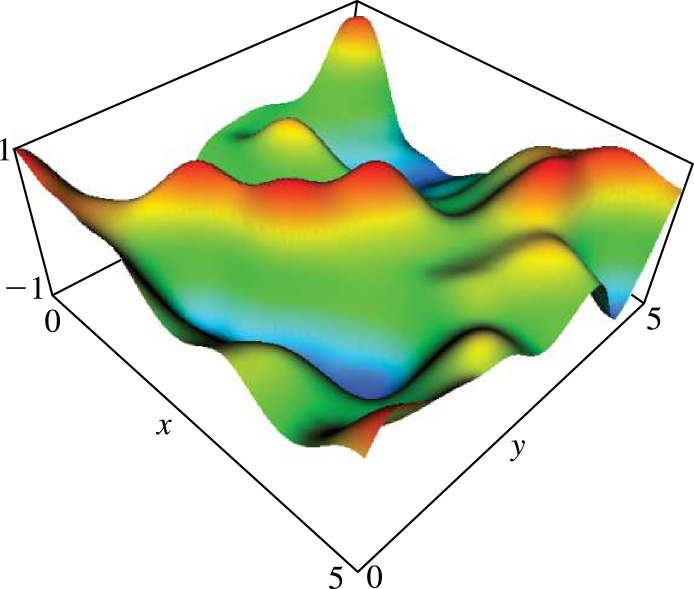
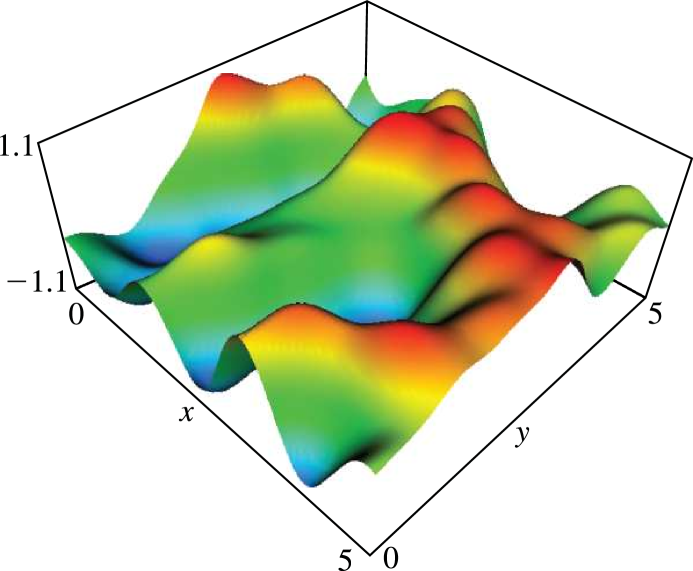
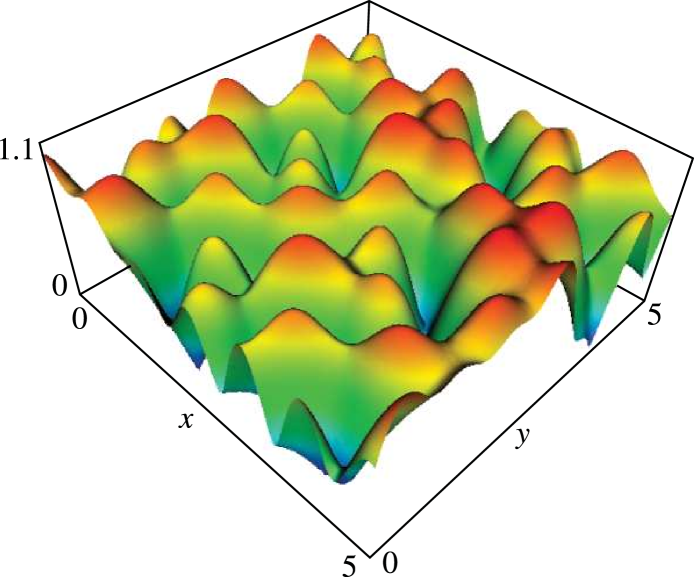
Figure 21.4.1:
θ
^
(
𝐳
|
𝛀
)
parametrized by (
21.4.1
). The surface plots are of
θ
^
(
x
+
i
y
,
0
|
𝛀
)
,
0
≤
x
≤
1
,
0
≤
y
≤
5
(suffix 1);
θ
^
(
x
,
y
|
𝛀
)
,
0
≤
x
≤
1
,
0
≤
y
≤
1
(suffix 2);
θ
^
(
i
x
,
i
y
|
𝛀
)
,
0
≤
x
≤
5
,
0
≤
y
≤
5
(suffix 3). Shown are the real part (a), the imaginary part (b), and the modulus (c).
3D
Help
ⓘ
Annotations:
Symbols:
θ
^
(
𝐳
|
𝛀
)
: scaled Riemann theta function
,
i
: imaginary unit
and
𝛀
: a Riemann matrix
Permalink:
http://dlmf.nist.gov/21.4.F1.mag
Encodings:
Magnified png
,
Magnified png
,
Magnified png
,
Magnified png
,
Magnified png
,
Magnified png
,
Magnified png
,
Magnified png
,
Magnified png
,
Vizualization
,
Vizualization
,
Vizualization
,
Vizualization
,
Vizualization
,
Vizualization
,
Vizualization
,
Vizualization
,
Vizualization
,
pdf
,
pdf
,
pdf
,
pdf
,
pdf
,
pdf
,
pdf
,
pdf
,
pdf
See also:
Annotations for
§21.4
and
Ch.21