19.18 Derivatives and Differential Equations19.20 Special Cases

§19.19 Taylor and Related Series

For N=0,1,2,\dots define the homogeneous hypergeometric polynomial

19.19.1 T_{N}(\mathbf{b},\mathbf{z})=\sum\frac{\left(b_{1}\right)_{{m_{1}}}\cdots\left(b_{n}\right)_{{m_{n}}}}{m_{1}!\cdots m_{n}!}z_{1}^{{m_{1}}}\cdots z_{n}^{{m_{n}}},

where the summation extends over all nonnegative integers m_{1},\dots,m_{n} whose sum is N. The following two multivariate hypergeometric series apply to each of the integrals (19.16.14)–(19.16.18) and (19.16.20)–(19.16.23):

19.19.2 \mathop{R_{{-a}}\/}\nolimits\!\left(\mathbf{b};\mathbf{z}\right)=\sum _{{N=0}}^{{\infty}}\frac{\left(a\right)_{{N}}}{\left(c\right)_{{N}}}T_{N}(\mathbf{b},\boldsymbol{{1}}-\mathbf{z}), c=\sum _{{j=1}}^{n}b_{j}, |1-z_{j}|<1,

If n=2, then (19.19.3) is a Gauss hypergeometric series (see (19.25.43) and (15.2.1)).

Define the elementary symmetric function E_{s}(\mathbf{z}) by

19.19.4 \prod _{{j=1}}^{n}(1+tz_{j})=\sum _{{s=0}}^{n}t^{s}E_{s}(\mathbf{z}),

and define the n-tuple \mathbf{\tfrac{1}{2}}=(\tfrac{1}{2},\dots,\tfrac{1}{2}). Then

19.19.5 T_{N}(\mathbf{\tfrac{1}{2}},\mathbf{z})=\sum(-1)^{{M+N}}\left(\tfrac{1}{2}\right)_{{M}}\frac{E_{1}^{{m_{1}}}(\mathbf{z})\cdots E_{n}^{{m_{n}}}(\mathbf{z})}{m_{1}!\cdots m_{n}!},

where M=\sum _{{j=1}}^{n}m_{j} and the summation extends over all nonnegative integers m_{1},\dots,m_{n} such that \sum _{{j=1}}^{n}jm_{j}=N.

This form of T_{N} can be applied to (19.16.14)–(19.16.18) and (19.16.20)–(19.16.23) if we use

19.19.6 \mathop{R_{J}\/}\nolimits\!\left(x,y,z,p\right)=\mathop{R_{{-\frac{3}{2}}}\/}\nolimits\!\left(\tfrac{1}{2},\tfrac{1}{2},\tfrac{1}{2},\tfrac{1}{2},\tfrac{1}{2};x,y,z,p,p\right)

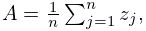
as well as (19.16.5) and (19.16.6). The number of terms in T_{N} can be greatly reduced by using variables \mathbf{Z}=\boldsymbol{{1}}-(\mathbf{z}/A) with A chosen to make E_{1}(\mathbf{Z})=0. Then T_{N} has at most one term if N\leq 5 in the series for \mathop{R_{F}\/}\nolimits. For \mathop{R_{J}\/}\nolimits and \mathop{R_{D}\/}\nolimits, T_{N} has at most one term if N\leq 3, and two terms if N=4 or 5.

19.19.7 \mathop{R_{{-a}}\/}\nolimits\!\left(\boldsymbol{{\tfrac{1}{2}}};\mathbf{z}\right)=A^{{-a}}\sum _{{N=0}}^{{\infty}}\frac{\left(a\right)_{{N}}}{\left(\tfrac{1}{2}n\right)_{{N}}}T_{N}(\boldsymbol{{\tfrac{1}{2}}},\mathbf{Z}),

where

19.19.8
A=\frac{1}{n}\sum _{{j=1}}^{n}z_{j},
Z_{j}=1-(z_{j}/A),
E_{1}(\mathbf{Z})=0, |Z_{j}|<1.

Special cases are given in (19.36.1) and (19.36.2).